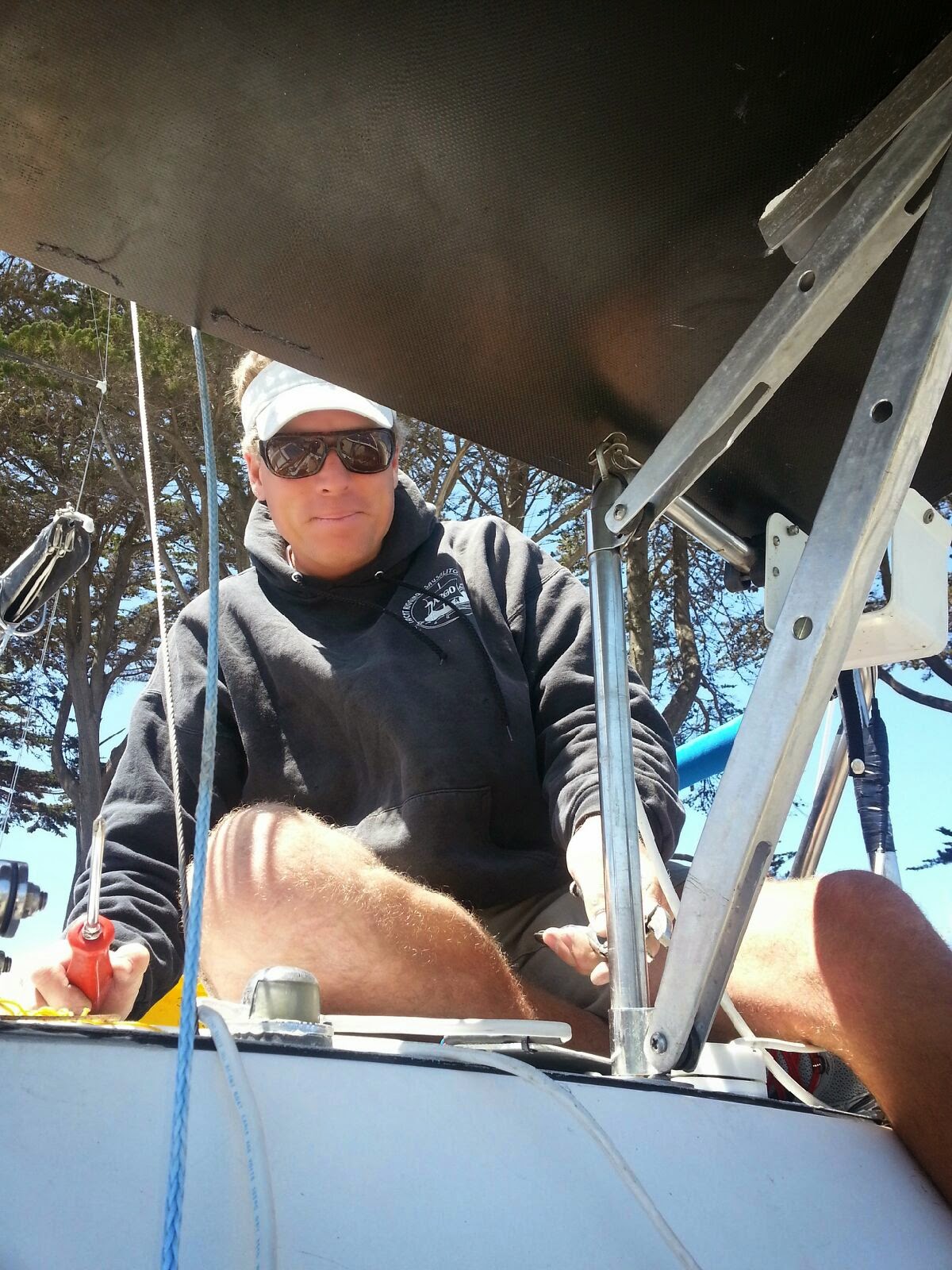
A lot of people ask me if I am not afraid when sailing solo. I do experience 'fear' or 'anxiety' mostly before I go which is why I am spending soooo much time trying to reduce to the maximum I can the likelihood of any failure (+ it's a race so even any failure that is just an annoyance but that could hae been prevented is probably a time loss I can do without).
I have had the boat surveyed (and after the keel incident that part is going to have a second lookover), I have had the rig taken down and inspected - and these are the two most important parts of the boat. I am taking a spare forestay (believe me I have learned that lesson...).
I am also worried about not getitng enough sleep which can become dangerous as you may not make good decisions when you are sleep deprived. I love one of Skip Allan's stories of the 2008 transpac where a sleep deprived racer is trying to have a radio conversation with Venus believing it was a ship light. And that's why I have invested so much time and money in steering systems and the associated electrical system (like pumping 200W worth of power into the batteries, etc...)
That's also why I have been sailing quite a bit solo since the beginning of the year - and I have been sailing the boat offshore since I got her so she is probably the safest boat for me to do the race on. I know what we can take safely.
I usually experience anxiety when I am light to no air and close to 'something' or in area with high ship traffic - because I am always worried that my outboard won't start...that's why I have AIS, carry an anchor, etc... and now I have even experienced rocks...proximity of lee shores isn't an issue for most of the race...so I am not to worried about that.
I do not experience any anxiety of 'what if a whale hits me again', 'what if I hit a container', etc...and there are two reasons for that. a) I can't do much to prevent it so I won't spend any time and effort there. + this risk exists with or without crew...Instead I look at the worst case scenario and I rehease in my mind what I would. Once I do this, I can go to sleep because I know that b) if it happens, I will most likely come out ok.
For instance, if your rig comes down - and assuming if has not hit you on the head and killed you instantly in which case there is nothing more you need to worry about - the real immediate risk you need to take care of is the mast poking a hole into the watertight hull. Elise's mast went down once, or rather it broke at the top. But there was absolutely no risk of poking. So we had plenty of time to remove the rigging, sort out cables, lines, etc... jury rig a mini sail and sail downwind slowly to the nearest port. It wasn't fun but it wasn't dangerous. And if the mast is threatening to poke a hole in the boat, I would
a) try to add cushions/protection to the boat on the side the mast is on (like fenders, sail bags hanging off lifelines, etc... to give myself more time to assess if I can recover the rig (unlikely given my strength) or if I need to let go of it and
b) remove pins (easier than cutting cables), run lines out of the mast, etc... and if need be use bolt cutter and saw to saw through shroud wire and rod
The other most catastrophic thing that can happen is your boat taking on water. If it is a small intake, a small plug to stop the water intake and potentially a fiberglass/fast cure epoxy fix over the top of it is probably enough to get you to your destination. Plug might be enough too if it is then dripping in and you might just have to pump out water from time to time.
If big big hole and boat going down, I have a lot of 'air filled' stuff on the boat which may prevent it from sinking and keep desk just above water. In which case, I might ask for help but might be able to stay on boat while it gets there. Gives me better comms, better protection from the elements. If boat really sinking...there is a liferaft which I keep on deck because it is easier to launch it from there. I have already had to take to a liferaft it isn't the end of the world (yet).
And I will keep my sat phone charged up at all times - and I can read 'War and Peace' to the Coast Guard before I run out of air time.
Other than that, a line might be cut loose and I can use spectra lines or halyards, or other sheets, etc... to still keep the rig up.
Anything else on the boat might seriously slow me down (like mast folds, ALL of my spinnakers are shredded to confettis, etc... but it is unlikely to kill me and I will probably have some time to think about how to deal with it. And if I must stop racing forced by the circumstances, it isn't a bad place to take a slightly longer cruise...
Medically, I am taking a floating hospital, enough to probably stabilize my situation for a little while.
And of course I have TWO EPIRBs...
So there is risk and I can't take it away. I don't believe that it is much greater than biking to work in the city though...so I am probably embarking on a safer adventure..
So no I am not super super anxious - the boat is a fast seaworthy vessel that I trust immensely. She has proven time and time again that she is up to the task. Elise can handle conditions far worse than what I can handle (and regardless of what the Purdeys say, she heaves to perfectly well). More like a feeling of excitment!
And I always keep in mind that if I make it to the other side it is because the sea has let me pass.


.JPG)

.JPG)
.JPG)
.JPG)





.JPG)
.JPG)
.JPG)
.JPG)